Our Services
We specialize in complete piano refinishing, offering expert polyester, lacquer, and semi-gloss finishes tailored to each instrument’s style and era. Whether restoring a modern high-gloss cabinet or reviving the warmth of a traditional lacquer finish, we focus on precision, durability, and a flawless final presentation.
Our services extend beyond the cabinet to include rim refinishing, plate restoration, and soundboard finishing—ensuring every visible and structural element reflects the same level of craftsmanship. From cosmetic renewal to full-scale refinishing projects, we restore beauty while preserving the integrity and legacy of your piano.
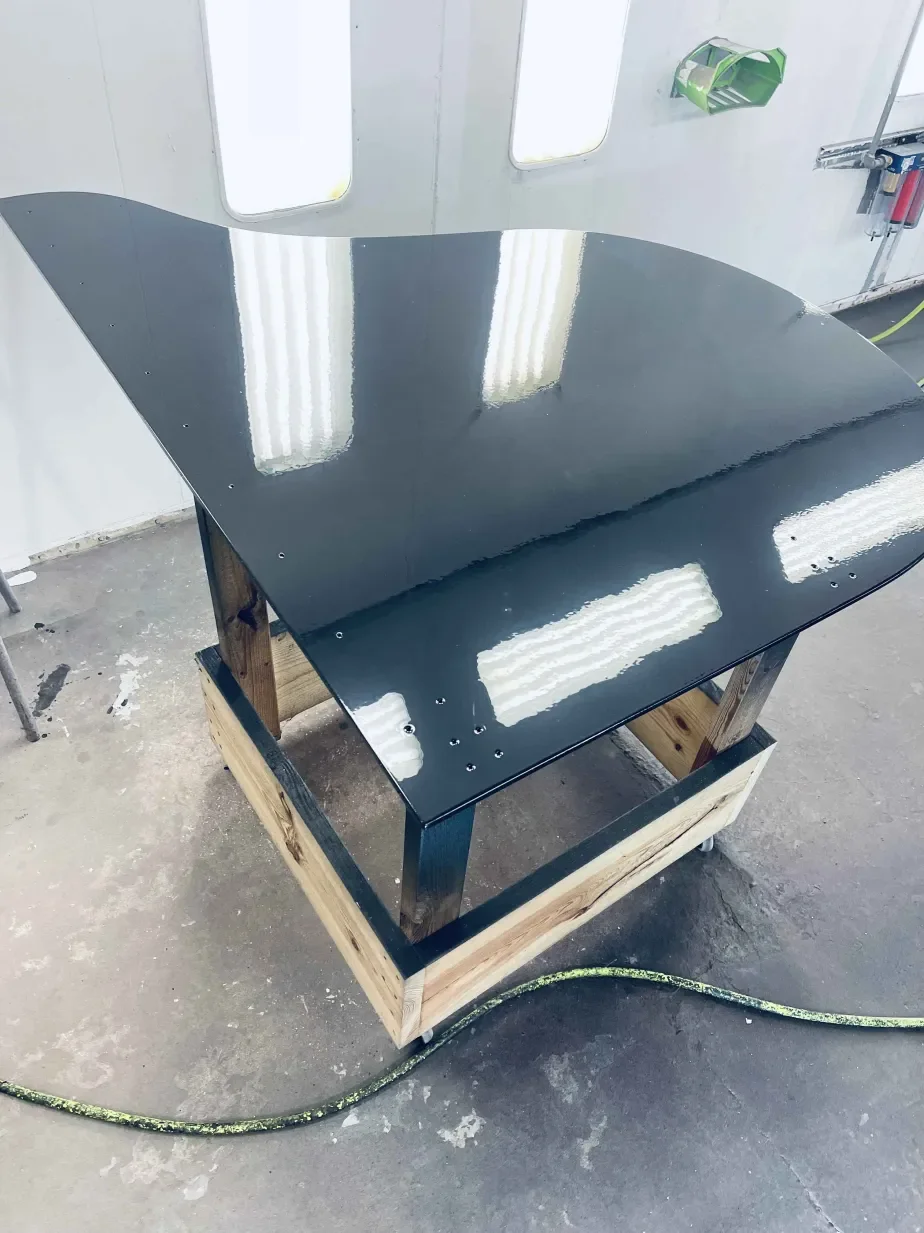
High-Gloss Polyester
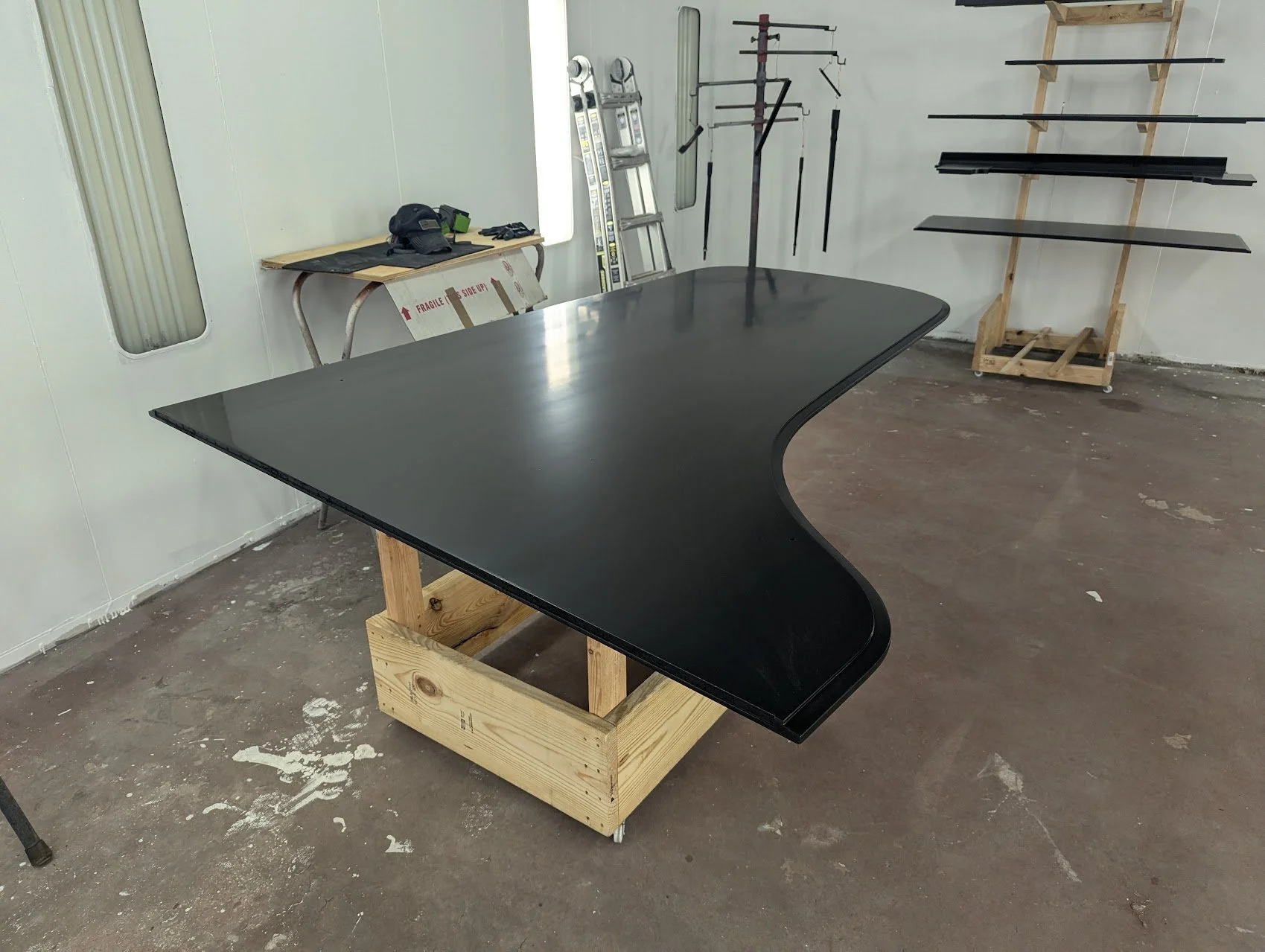
Refinishing a piano with a high-gloss polyester finish is the gold standard for achieving that mirror-like, "wet look" often found on premium concert grands. Unlike traditional lacquer or polyurethane, polyester is a thick, durable resin that creates a deep, glass-colored surface. The process begins with meticulous preparation: the old finish is completely stripped, and the wood is sanded to a surgical smoothness. A specialized grain filler or sealer is then applied to ensure the wood is entirely non-porous, preventing the resin from sinking into the grain and creating an uneven reflection.
The core of the process involves spraying multiple heavy coats of a two-part polyester resin. Because polyester is "high-build," it creates a substantial layer that acts as a protective armor for the instrument. Once the resin has cured—a stage where it becomes incredibly hard—the real artistry begins. Technicians use a series of progressive wet-sanding steps, starting with coarse grits and moving to incredibly fine abrasives. This levels the surface to a perfect flat plane, removing any "orange peel" or imperfections.
Finally, the piano undergoes an intensive mechanical buffing phase. Using high-speed polishing wheels and various grades of buffing compounds, the surface is polished until it achieves its signature optical clarity. The result is a finish that is not only visually stunning but also remarkably resistant to scratches and environmental changes.
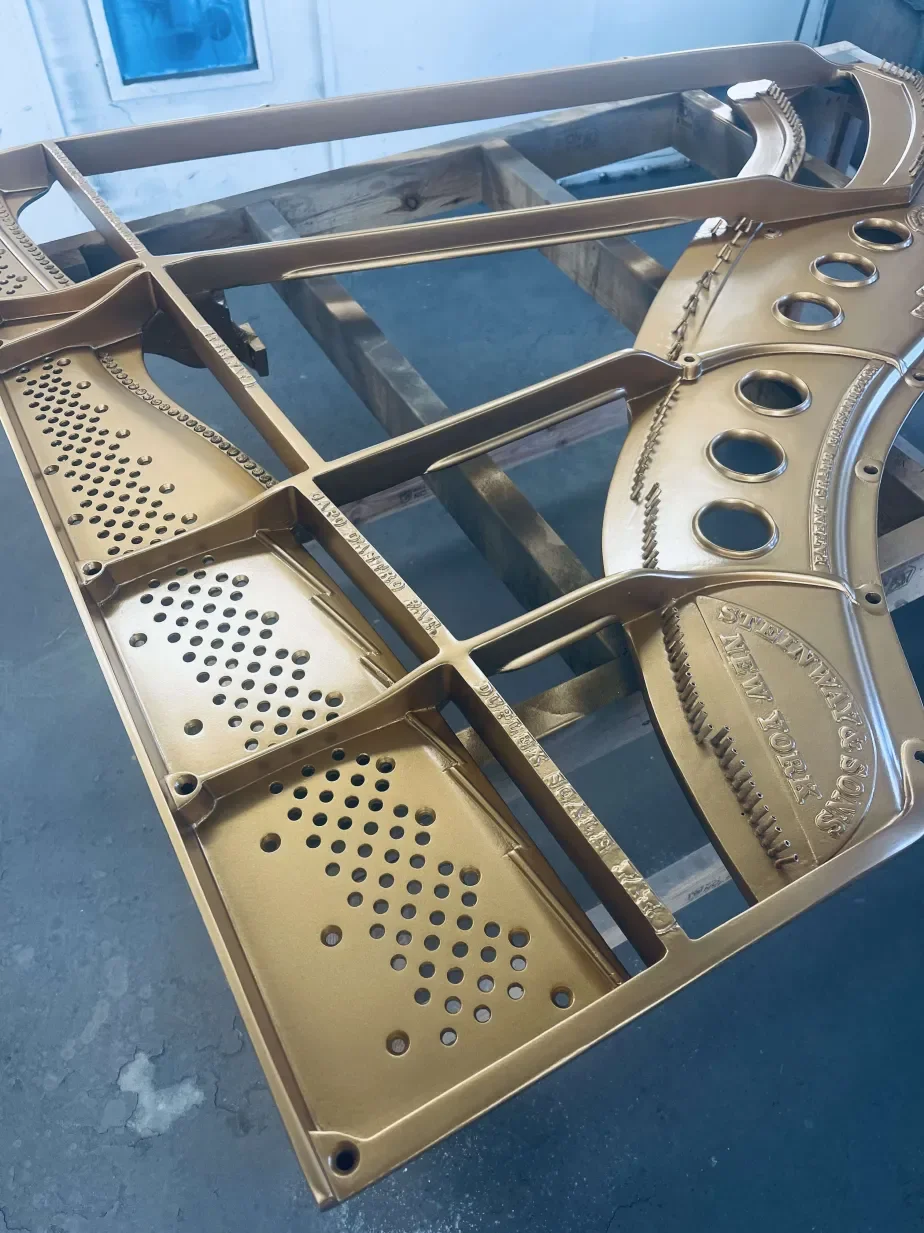
Plate Refinishing
Refinishing the piano plate—the massive cast-iron frame that anchors the strings—is the most striking part of an interior restoration. The process begins by stripping the old, flaking paint and cleaning the porous metal to remove decades of oxidation. Technicians then apply a specialized high-build primer-filler, which is sanded to a glass-smooth surface to eliminate the rough "sand-cast" texture of the iron. This meticulous preparation is what allows the final finish to look like solid, polished metal rather than painted hardware.
While we specialize in the classic shimmering bronze and "gold bullion" tones that define the traditional aesthetic, we also offer a large spectrum of custom plate colors to suit modern or bespoke designs. Whether you prefer a contemporary metallic silver, a deep midnight black, or even a bold automotive-style pearl finish, the color is applied using fine metallic powders or high-grade urethanes for maximum depth. To complete the transformation, the manufacturer’s raised lettering is often hand-detailed in a contrasting pigment, and the entire plate is sealed in a protective clear coat to prevent future tarnishing and ensure the "heart" of your piano remains vibrant for a lifetime.
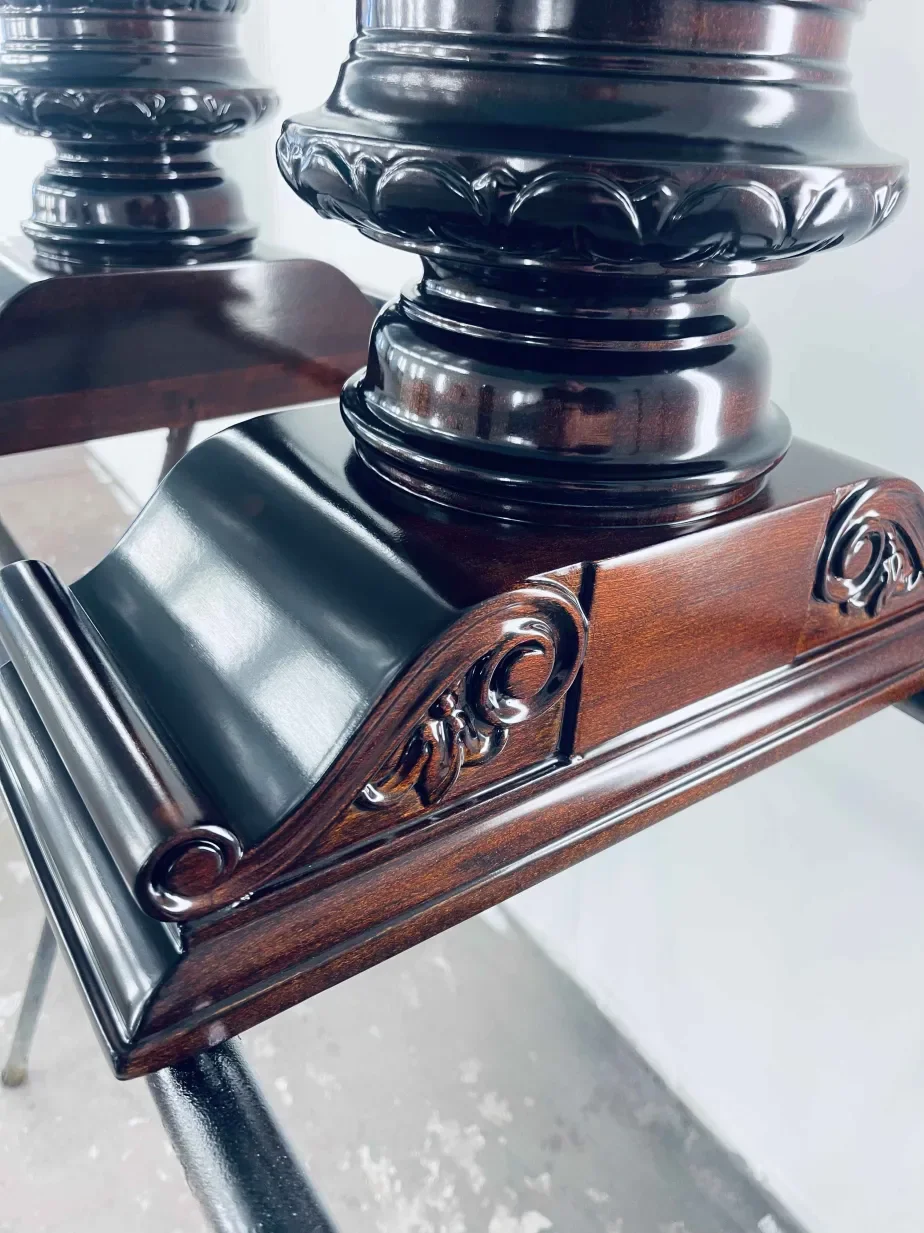
Semi-Gloss Polyester
While the high-gloss look is iconic, a semi-gloss polyester finish (often referred to as a "satin polyester") offers a more understated, contemporary elegance. This finish provides the same legendary durability and structural protection as its high-gloss counterpart but without the intense, mirror-like reflections. The initial application process is nearly identical: the piano is prepped, sealed, and sprayed with multiple heavy layers of polyester resin to build a thick, resilient foundation. The difference lies entirely in the final stages of surface manipulation.
Instead of buffing the cured resin to a high shine, technicians perform a precision "rubbing out" process. Using ultra-fine abrasives or specialized steel wool equivalents, they introduce a consistent, microscopic scratch pattern across the entire surface. This scatters the light rather than reflecting it directly, resulting in a smooth, velvety sheen that feels soft to the touch. This finish is particularly popular for modern interiors because it is much more forgiving of fingerprints and dust than a high-polish surface, maintaining a clean, professional aesthetic with significantly less maintenance.
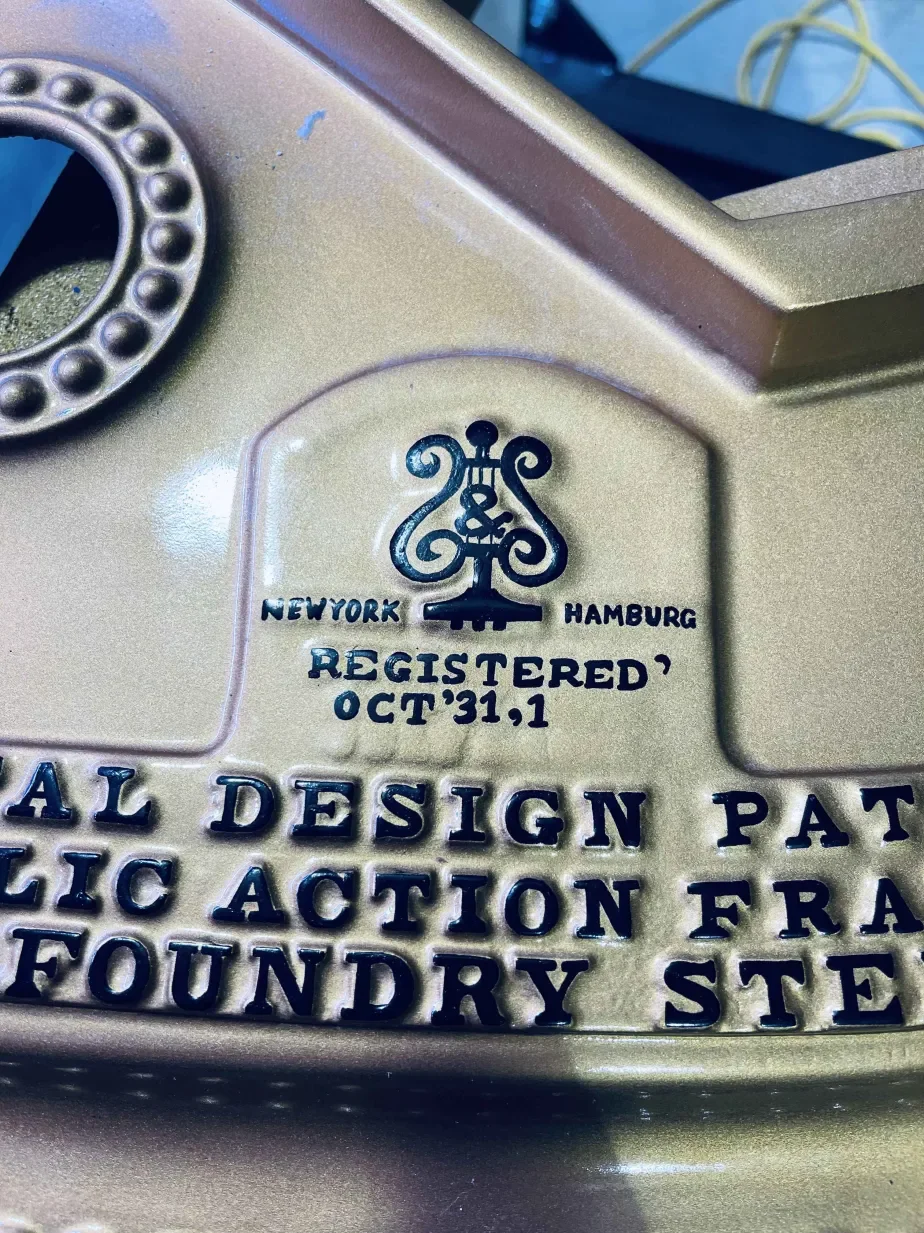
Plate Lettering
The hand-lettering of the piano plate is the final, artisanal flourish that brings the "heart" of the instrument to life. Once the plate has been refinished in its primary bronze or custom color, the embossed manufacturer’s name, crests, and serial number frames often sit muted beneath the new coat. To make these details pop, a technician meticulously hand-paints the raised surfaces using a fine-tipped camel hair brush and specialized high-pigment enamel. While classic black is the most traditional choice for creating a sharp, legible contrast against a gold or bronze background, we also offer custom detailing in deep burgundies, royal blues, or even metallic silvers to complement your chosen plate color and felt work.
This process requires a steady hand and an eye for historical accuracy, as many vintage pianos feature intricate scrolling and ornate relief work that define the brand's heritage. The paint is applied with just enough thickness to provide a crisp, three-dimensional effect without appearing clumpy or uneven. Once the lettering has cured, it is often sealed under a final protective clear coat, ensuring that the branding remains sharp and vibrant for decades. This small but vital detail transforms a simple piece of industrial hardware into a personalized work of art that proudly displays the piano's pedigree.
Lacquer
Traditional lacquer finishing—often referred to as a "hand-rubbed" finish—is the classic choice for vintage American and European pianos. Unlike the thick, plastic-like shell of polyester, lacquer is a thinner, solvent-based coating that bonds deeply with the wood. The process involves spraying numerous thin coats, allowing each layer to "melt" into the previous one. This creates a finish that is celebrated for its organic warmth and clarity, as it highlights the natural texture and character of the wood grain rather than masking it under a heavy resin.
The hallmark of a high-quality lacquer job is the labor-intensive rubbing and polishing sequence. After the final coat has fully outgassed and hardened, the surface is leveled with fine sandpaper and then rubbed by hand using oil and abrasive powders (like pumice or rottenstone) or modern polishing compounds. This allows for incredible versatility; a technician can tailor the sheen from a soft, glowing satin to a deep, rich high-sheen. While lacquer is more susceptible to environmental shifts and scratches than polyester, many purists prefer it because it is easier to repair and is widely believed to allow the piano’s wooden cabinetry to vibrate more freely, potentially enhancing the instrument's resonance.
Soundboard Refinishing
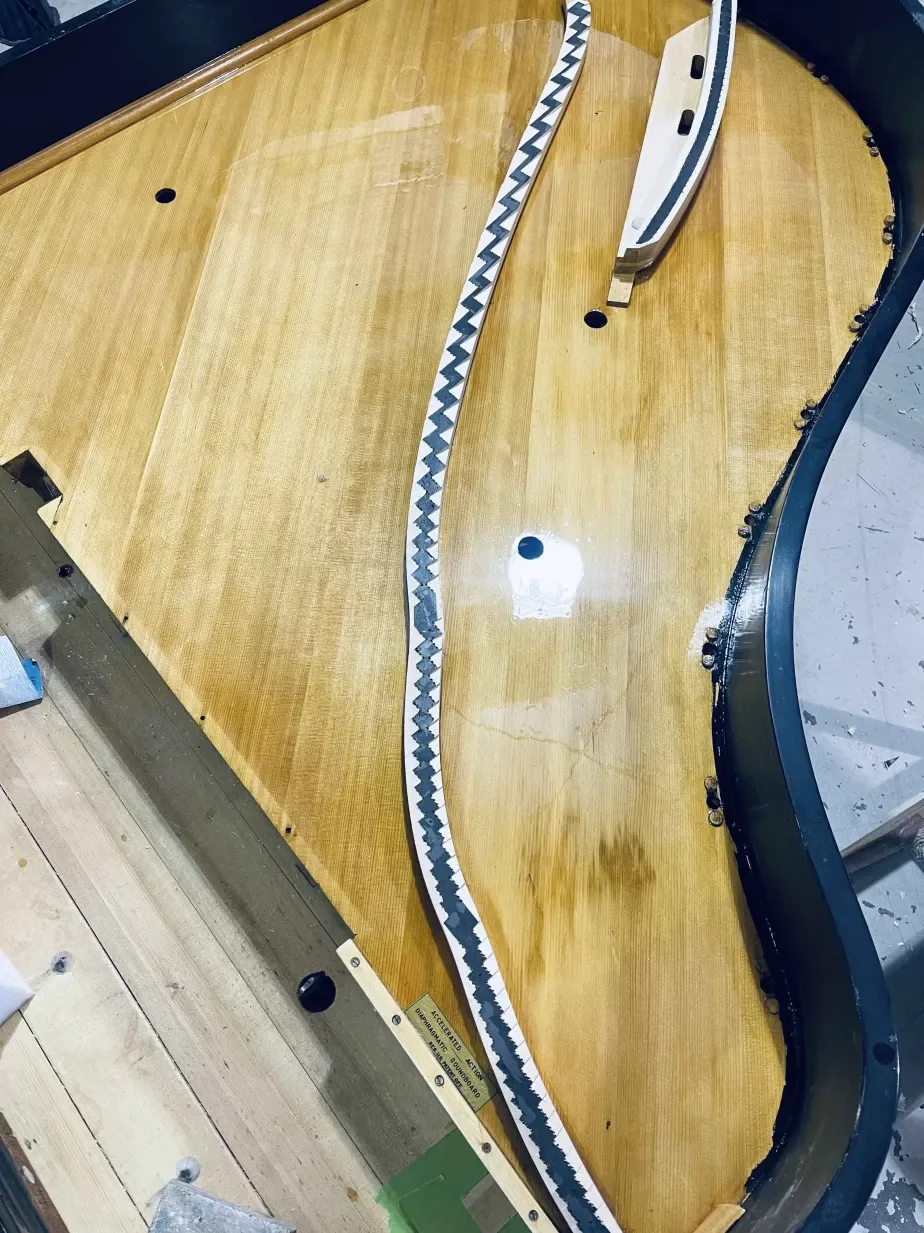
Refinishing the piano soundboard is a delicate balance of acoustic preservation and aesthetic restoration, as this large spruce diaphragm is responsible for the instrument's voice. The process begins with the careful removal of decades of "grime," oxidized varnish, and old decals using specialized scrapers and fine-grit sandpaper, taking extreme care not to remove excess wood which could compromise the board's structural integrity or "crown." If the soundboard has developed cracks due to age and humidity fluctuations, these are meticulously repaired using spruce shims that are glued into the widened gaps and planed flush to the surface, ensuring a seamless, tensioned repair that restores the board's resonant properties.
Once the wood is stabilized and cleaned, a high-quality musical instrument sealer is applied to protect the spruce from moisture while remaining flexible enough to vibrate. We then apply multiple coats of specialized soundboard lacquer, available in a variety of traditional amber hues or clear modern finishes to highlight the straight, tight grain of the Sitka spruce. Before the final clear coats are applied, a new custom-reproduced water-transfer decal of the manufacturer’s original logo is positioned with historical accuracy. The result is a vibrant, glowing surface that not only looks like it just left the showroom but also provides the necessary tension and protection for the piano to sing with its original clarity.